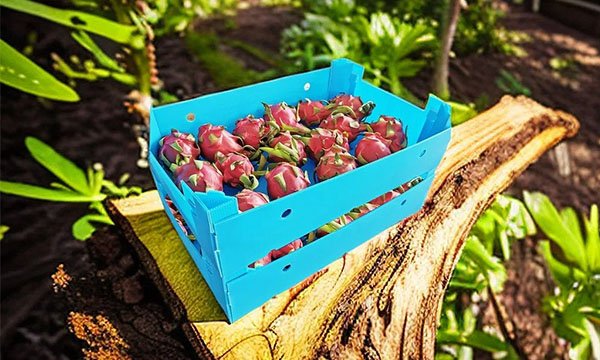
A corrugated plastic vegetable and fruit box is a die-cut, creased carton made from PP hollow board. It folds flat when empty, locks into a rigid crate when filled, and survives the two things that kill paper cartons in a packhouse: condensation from pre-cooled produce and a wash-down between runs. The same box carries the grower code, grade mark and traceability data that buyers and retailers now ask for on every pallet.
✕Where Foam Cartons and Glued Board Stop Working
Most packhouses still run a mix of expanded foam and glued corrugated board, and most of them have a story about a rejected load. Three failure modes push the switch to PP board.
Condensation. Produce comes out of the cold room at 4 °C and meets humid air on the dock. Paper board takes up that water, loses about half its stacking strength, and the bottom layer of a four-high pallet starts to bow before the truck is loaded.
Wash-down. Foam cannot be cleaned at the temperatures a food-safety audit expects, and it crumbles at the corners after a few trips. PP board takes a hose, a brush and a sanitiser, and goes back into service.
Print. Waxed or coated carton holds ink badly, and a smeared grower code is exactly what a retail audit picks up on.
None of this makes PP the automatic answer for every load. For a single one-way shipment of dry onions to a nearby market, a glued carton is cheaper and perfectly adequate. The case for PP board starts when the box has to come back, be cleaned, or carry printed data that has to survive handling.
▤Choosing Thickness and Grammage for the Load
Buyers usually specify thickness and stop there, which is where stacking complaints begin. Two 4 mm boxes can differ by 40 % in grammage, and grammage is what carries the load. In practice we see three bands for produce:
3 mm, 600–700 gsm — leafy greens, herbs, berries in trays. Roughly 10–15 kg per box, stacked two high.
4 mm, 700–900 gsm — the general-purpose produce box: tomatoes, peppers, courgettes, apples. 15–20 kg, three to four high.
5 mm, 900–1200 gsm — root crops, melons, export loads that sit in a container for three weeks. 20–25 kg, five high.
Treat those figures as a starting point, not a warranty. Stack height, pallet pattern, humidity and how long the load sits in a container all move the number. Tell us the load, the stack and the transit time, and we will propose a board — then send a sample box so you can load it before you commit to a run.
⚙Construction: Folding, Locking and Ventilation
The sheet is creased on a rotary or flatbed creaser, then die-cut. Three construction details decide whether the box works on a packing line:
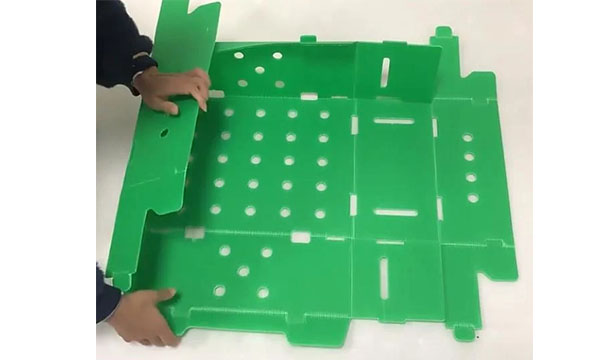
Fold pattern. A one-piece box with a self-locking base assembles in about three seconds without tape. A two-piece tray-and-lid suits heavier loads and gives a flatter top for labelling.
Lock tabs. The base and corner tabs are the first thing to fail on a cheap box. We cut them with a 0.3 mm clearance and test the lock 50 times on a sample before a run.
Ventilation. Punched slots or round holes, sized to the crop. Leafy produce needs 6–8 % open area for forced-air cooling; root crops need less. Holes cut too close to a crease line tear on the second fold.
Hand holes matter more than buyers expect: a 15 kg box gets lifted by one person at the end of a shift, and a rectangular hand hole with a rounded corner lasts far longer than a plain slot.
✎Printing Grower, Grade and Traceability Data
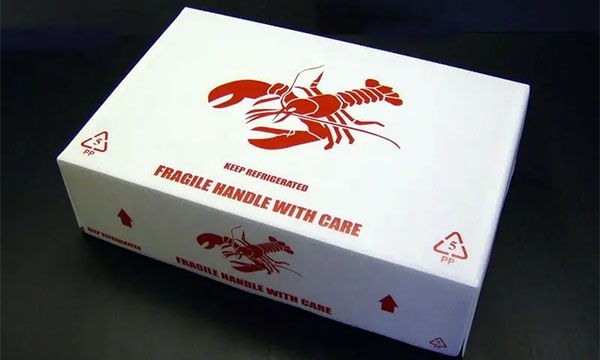
Screen printing gives the lowest cost per box for one or two colours and holds up well to washing. UV digital printing is worth the premium when a retailer needs a four-colour brand mark, a variable grower code, or short runs of several grades on the same order. Both are printed on the flat sheet before creasing, so artwork has to keep clear of the fold lines — we send a die-line drawing with the quote so your designer can see exactly where the folds fall.
For traceability, most of our produce customers print a fixed block (grower name, origin, packhouse code) and apply the variable lot and date on a label. Printing a variable code directly is possible but adds a print set-up per change, which rarely pays below a few thousand boxes.
✔Writing a Specification We Can Quote Against
A usable spec answers six questions: internal dimensions in millimetres, board thickness and grammage, fold pattern, ventilation pattern, print colours and artwork, and pack format (flat bundles or assembled). Send those six and we can quote the same day. Send a sample box instead and we will measure it, match the board, and return a drawing for approval before tooling.
Two details are worth settling early. First, whether the box has to fit a standard pallet footprint — 600 × 400 mm and 400 × 300 mm are the common ones, and a box that overhangs by 20 mm loses a pallet position. Second, the folded thickness, because it decides how many empty boxes fit in a return truck.
⚑What We Check Before a Box Leaves the Plant
Every production lot is sampled against the approved drawing. We check internal dimensions with a tape on the assembled box, board grammage on a 100 × 100 mm coupon, crease quality by folding a corner 180° and looking for whitening, lock strength by assembling and shaking a loaded sample, and print registration against the artwork. A lot that fails any of the five is held, not shipped with a note.
⏱Cost per Trip, Not Cost per Box
A PP produce box costs more than a glued carton at the till, and less every time it comes back. The number that matters is cost per trip: divide the box price by the trips you actually get, then add the return freight and the wash. On a domestic retail loop with six trips a season, a 4 mm printed box usually lands below the carton it replaced. On a one-way export where the box is sold with the fruit, it usually does not — and we will tell you so rather than quote you a box that loses money.
Two things shorten the life of a returnable box: tearing at the hand hole and UV exposure in an open yard. Both are design and storage issues, not board issues, and both are cheaper to fix at the drawing stage than to replace in the second season.
If your buyer requires a food-contact declaration, raise it at the quotation stage. Our board is extruded from virgin polypropylene, and the resin batch can be documented against the order so the paperwork matches what was actually shipped.
ℹAbout the Manufacturer
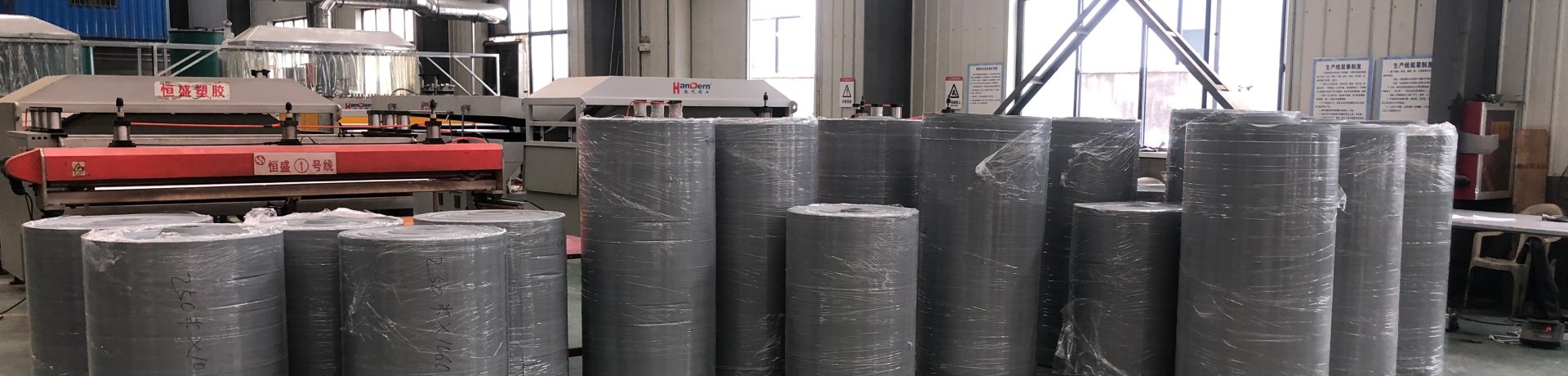
Qingdao Hengsheng Plastic Co., Ltd. has extruded PP hollow board in Qingdao since 2012. Four lines give us a capacity of 20,000 tons a year, and we convert the board in the same plant — creasing, die-cutting, ultrasonic welding and print — so the box is not bought in from a converter and marked up. We ship to more than 120 countries, with produce boxes going mainly to Spain, Italy, Turkey, Chile and the Gulf.
Written by the Hengsheng technical sales team, Qingdao · Last updated: November 2026
One-piece self-locking base, or two-piece tray and lid
Standard sizes
600×400×230 mm, 500×300×200 mm, 400×300×200 mm — or cut to drawing
Ventilation
Slots or round holes, 4–8% open area, positioned clear of creases
Handling
Rounded-corner hand holes, 2 per box as standard
Printing
Screen print 1–3 colours, or UV digital for full colour and short runs
Colour
White, black, blue, green, red, yellow; Pantone matching on request
Fold ratio
Flat-packed, roughly 1:6 against assembled volume
Temperature
Suitable for chilled produce; not for oven or hot-fill use
MOQ
200 pcs per size and print
Lead time
7 days after T/T deposit for standard specs; 12–15 days with print
Packing
Flat bundles on pallet, stretch wrapped, or assembled on request
faq
Q: Are you a factory or a trading company?
A: We are the manufacturer. Four PP hollow board extrusion lines in Qingdao give us a capacity of 20,000 tons a year, and the boxes are creased, die-cut and printed in the same plant.
Q: Should I choose 3 mm or 5 mm board for produce?
A: Match it to the load, not to habit. 3 mm at 600–700 gsm suits leafy greens and berries at 10–15 kg; 4 mm at 700–900 gsm is the general-purpose box for tomatoes, peppers and apples; 5 mm at 900–1200 gsm is for root crops, melons and export loads that stack five high.
Q: How much weight will one box carry?
A: A 4 mm box at 800 gsm typically carries 15–20 kg in a three or four-high stack. The honest answer depends on stack height, pallet pattern and how long the load sits in a container, so we send a sample for you to load before a full run.
Q: Can the boxes be washed and reused?
A: Yes. PP board takes a hose, a brush and food-grade sanitiser. Avoid steam above about 80 °C and strong solvents, both of which dull the surface. Most produce customers get several seasons out of a box, and the board is recyclable at end of life.
Q: Can you print our brand and grower code?
A: Yes. Screen printing for one to three colours, UV digital for full colour and short runs. Printing happens on the flat sheet before creasing, so we send a die-line drawing with the quote and your artwork must stay clear of the fold lines.
Q: What is the minimum order and lead time?
A: 200 pcs per size and print. Standard unprinted specs ship 7 days after the T/T deposit; printed orders take 12 to 15 days because of the print set-up and drying time.
Q: What are your payment terms?
A: 30% T/T deposit with the order, balance against the bill of lading copy. L/C at sight is accepted for larger orders.
Q: Can you match a sample box we already use?
A: Send one box and we will measure it, identify the board grammage, and return a drawing with the fold pattern and ventilation layout for your approval before tooling. That route usually saves a revision.